


Blocked Ear After a Cold: What ENT Doctors Actually See
Blocked ears following a cold are not just a sensation — in many cases, there is real fluid inside the middle ear. This is a common ENT condition and can be objectively diagnosed, not guessed.
What Actually Happens After a Cold
Upper respiratory infections cause inflammation of the nasopharynx and Eustachian tube, leading to:
Failure of middle ear ventilation
Negative middle ear pressure
Filling of fluid into the middle ear space
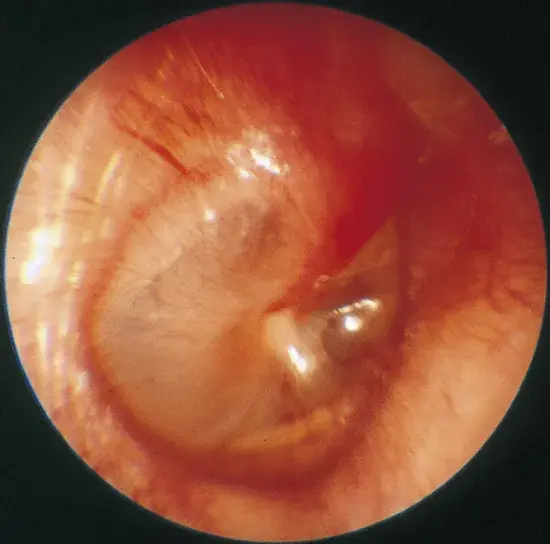
This results in early acute otitis media, depending on severity.
What We See on ENT Examination (Very Important)
🔍 Otoscopy / Endoscopic Examination
Dull tympanic membrane
Visible fluid level or air–fluid bubbles
Bulging tympanic membrane (in acute cases)
Tympanic membrane congestion or redness
Reduced or absent cone of light
👉 These findings are clearly visible on:
Standard otoscope
Rigid or flexible endoscopic ear examination
This is not a “normal ear”.
How It Is Confirmed Clinically
🎵 Tuning Fork Tests

Rinne test: Negative (conductive hearing loss)
Weber test: Lateralises to affected ear
These confirm conductive hearing loss due to middle ear fluid.
Conductive hearing loss pattern
Type B or Type C tympanogram
👉 Imaging is not required in routine cases.
Symptoms Patients Experience
Ear blockage or fullness
Muffled hearing
Ear pressure
Mild to moderate ear pain
Crackling or popping sensation
⚠️ Vertigo is uncommon unless inner ear involvement exists.
What DOES NOT Help (Remove These Myths)
🚫 Warm compress
🚫 Ear candling
🚫 Oil drops
🚫 Steam directed into the ear
🚫 Cotton buds
🚫 Empirical antibiotics without examination
These have no role in treating middle ear fluid and should not be promoted.
Evidence-Based Management
Management depends on severity and duration:
✅ Nasal treatment (key step)
Short course topical nasal decongestants
Intranasal steroid sprays (especially if allergic rhinitis present)
✅ Autoinflation (selected patients) better toynbee manuveur
Valsalva manoeuvre (only if tympanic membrane intact)
✅ Analgesics
For pain relief only
❌ Antibiotics
Not routinely needed unless acute bacterial otitis media is present
⏳ Observation [ very important ]
Many cases resolve as Eustachian tube function returns
When ENT Intervention Is Required
Consult an ENT specialist urgently if:
Severe ear pain
High fever
Progressive hearing loss
Bulging tympanic membrane
Persistent effusion beyond 3 months
Recurrent episodes after every cold
Chronic cases may require myringotomy or grommet insertion, especially in children.
Why Early ENT Diagnosis Matters
Incorrect or delayed treatment can lead to:
Chronic otitis media with effusion
Recurrent ear infections
Speech delay (children)
Persistent conductive hearing loss
Early ENT evaluation prevents unnecessary medications and complications.
ENT Care at Relentcare ENT Centre, Thrissur
At Relentcare ENT Centre, ear blockage after colds is assessed using:
Otoscopy and endoscopic ear examination
Tuning fork tests
Targeted audiology only when required
We focus on evidence-based treatment, not home remedies or guesswork.
📍 Relentcare ENT Centre – Thrissur- Accurate diagnosis. Ethical treatment. ENT care you can trust.
Read More: Related Ear Conditions Explained by ENT Specialists
🔗 Fluid Behind the Eardrum (Otitis Media with Effusion)Understand why fluid collects in the middle ear, how it’s diagnosed on otoscopy, and when treatment is required.
🔗 Eustachian Tube Dysfunction After ColdLearn how nasal infections affect ear ventilation and cause blockage, pressure, and hearing changes.
🔗 Toynbee vs Valsalva Manoeuvre – Which Is Safer for Blocked Ears?ENT-approved guidance on pressure equalisation techniques and when to avoid forceful ear popping.
🔗 Ear Fullness with Normal Ear ExaminationWhy some patients feel blocked ears even when initial findings appear normal.
🔗 Muffled Hearing After Cold – Is It Temporary?Causes of temporary hearing loss following upper respiratory infections.
🔗 When Ear Blockage Needs ENT TreatmentRed-flag symptoms that should not be ignored.
🔗 Blocked Ear in Children After ColdHow middle ear fluid affects children differently and when grommets are considered.


Comments